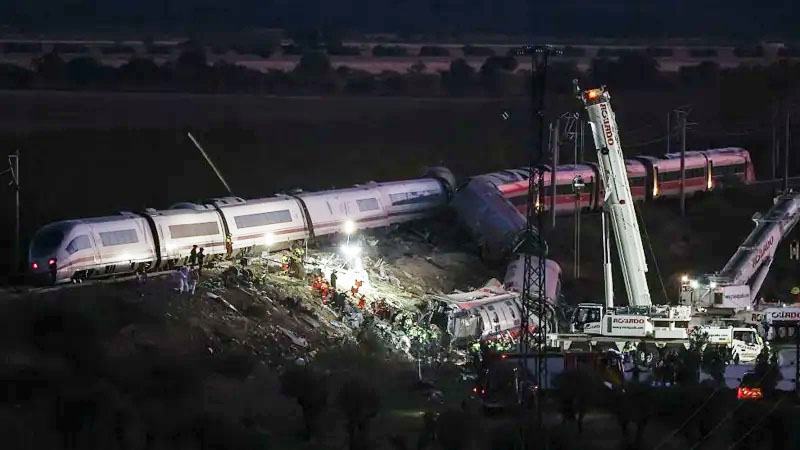
A tragic collision between two high-speed trains in Spain’s central province of Toledo has plunged several families into grief. So far, approximately 64 deaths have been confirmed, while 179 people are reported to have been injured. Earlier, around 50 fatalities had been confirmed, but the death toll rose to more than 60 after additional bodies were recovered during rescue operations. Authorities fear that the number of fatalities could rise further. Following the accident, rail services between Madrid, Ciudad Real and Andalusia have been suspended, severely disrupting railway operations.
According to Esther Padilla, spokesperson for the Castilla-La Mancha region, 397 passengers were travelling on a Renfe train, while 147 were aboard an Iryo train. This means that approximately 550 passengers were travelling on the two trains combined, with reports indicating that around 250 people have been affected so far. This is the second major high-speed rail disaster in Spain this year. Earlier, a train derailed in Adamuz, killing 45 people. Another accident in 2013 claimed 80 lives. In light of these incidents, concerns over the safety of high-speed rail networks in Spain and across Europe are once again coming to the forefront.
The accident in Toledo is the fifth railway accident reported this year and the deadliest of 2026. At least 111 people have lost their lives in the five accidents recorded so far this year. Previous incidents had also left at least 335 people injured. The latest accident in Toledo occurred on the same railway line where a train accident took place in Adamuz on January 18.