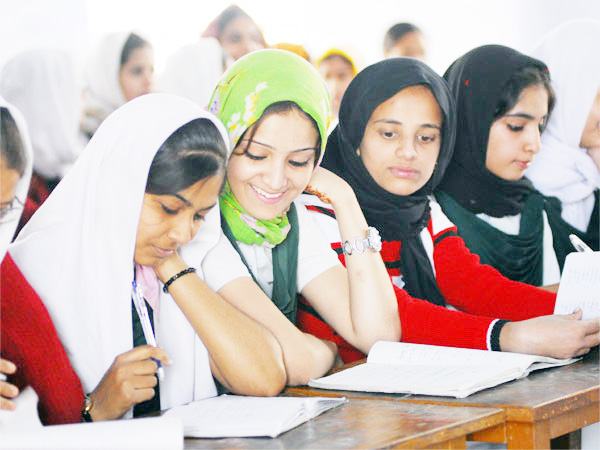
The progress of any society cannot be measured merely by its tall buildings, wide roads, modern technology, or rising incomes. The true measure of progress is how much that society has empowered its younger generation, how much education it has provided to its daughters, how much decision-making ability it has given them, and how well it has prepared them to face the challenges of life. Today, there have certainly been significant changes in India with regard to women’s education and employment, but one fundamental question still stands before us: Are we merely educating our daughters, or are we truly preparing them for life?
This question is important because education does not simply mean passing examinations, obtaining a degree, or adding an educational qualification to an official document. Education gives a person the ability to think, understand, question, make decisions, and find solutions to problems. If an educated girl understands her rights and responsibilities, has a basic understanding of financial matters, knows how to use technology effectively, can make informed decisions about her health and family, and is able to respond to difficult situations with balance, then her education does not remain limited to her own life; she becomes an intellectual and practical source of strength for the entire family.
India has made significant progress in women’s education over the past several years. According to the World Bank, available figures for 2025 show that approximately 89 percent of girls in India completed lower secondary education, a rate that was slightly higher than that of boys. These figures are certainly encouraging, but stopping here is not enough. After access to school and completion of education, the next question is: How open are the pathways ahead for these educated girls? This is precisely where our social thinking begins to be tested.
Women’s economic participation should not be viewed solely through the lens of employment. A woman can teach from home, provide online services, run a small business, or generate income through handicrafts, tailoring, food products, educational services, or other skills. The digital world has opened doors to work that would have been difficult to imagine a generation ago. However, in this new era, a woman can benefit from these opportunities only if, along with basic education, she possesses digital literacy, language skills, numeracy, communication abilities, and professional skills.
This is where the responsibility of our religious and educational institutions also becomes much greater. In particular, women’s madrasas and educational centres need to seriously consider the reality that today’s female student is not merely a student of books; she may become a future mother, teacher, administrator, social worker, entrepreneur, and responsible citizen. Along with religious education, she should also be introduced to languages, basic computer skills, the safe use of digital tools, basic financial knowledge, health and hygiene, communication, and the practical skills required for everyday life.
This does not mean that the importance of religious education should be diminished. In fact, the opposite is true. Without moral training, knowledge can sometimes make a person merely more capable, rather than more responsible. We need an education that develops character alongside knowledge, ethics alongside skills, and responsibility alongside freedom. Our daughters need to be taught that moving forward in the world and remaining connected to their values are not contradictory.
We must also reconsider our social priorities. In some families, a girl’s education is considered important only until she reaches marriageable age. In some places, the purpose of education is reduced to securing a good marriage proposal. Such thinking limits a girl’s personality and full human potential to a particular social role. Marriage is an important part of life, but it is not the entire purpose of a woman’s life. Likewise, motherhood is a great responsibility, but it does not mark the end of a woman’s intellectual, academic, or creative abilities.
A conscious society does not tell its daughters that they must necessarily pursue employment; rather, it gives them the ability to make the right decisions for themselves. If a woman chooses to make her home and family her priority, that choice should be respected. And if she wishes to contribute to society through education, teaching, business, or a profession, safe and dignified opportunities should also be available to her. The real issue is not to fit women into a particular mould, but to enable them to use their abilities in a positive and constructive manner.
Parents have the most important role to play in this regard. Buying an expensive mobile phone for a daughter is not progress; teaching her how to use it properly and safely is progress. Getting her admitted to a good university is not enough; developing in her a love for books and the habit of research is equally important. Teaching her English or another language is useful, but strengthening her expression and intellectual maturity in her mother tongue is equally important. Preparing her only for a job is not enough; we must also teach her how to protect herself from financial fraud, online crime, misinformation, and the negative effects of social media.
While discussing women’s economic participation, we must not forget that raising children, caring for the elderly, and fulfilling family responsibilities are also genuine forms of social work. The solution is not to take domestic responsibilities away from women, but to ensure that families and society distribute these responsibilities in a fairer and more organised manner. Men, women, parents, and educational institutions all need to understand their respective responsibilities.
For madrasas in particular, this is a historic opportunity. If women’s madrasas can prepare a generation that remains connected to the Qur’an and Sunnah while also understanding the requirements of the modern world; a generation that can conduct research, write and speak effectively, possesses basic digital skills, can manage a home, provide intellectual and moral guidance to children, and, when necessary, play a dignified economic role, then such education will not transform the life of just one student; its impact will extend across generations.
We need to see our daughters not merely as future daughters-in-law or wives, but as complete human beings and responsible individuals. The daughter whom we give confidence, knowledge, character, and skills today will not only build her own future tomorrow; she will also help determine the direction of an entire family. Conversely, if we train a daughter only to remain silent, depend on others, and wait for others to make decisions, we may give her a degree, but we may fail to give her the real abilities needed for life.
The question is not how many degrees our daughters are earning. The real question is how aware, principled, skilled, and empowered they are becoming after earning those degrees. Nations become stronger when their homes become centres of learning, their madrasas become institutions of character-building, and their daughters become a generation capable not merely of dreaming, but of turning those dreams into reality.
If we merely educate our daughters, perhaps one individual will become educated. But if we give them character alongside knowledge, self-confidence alongside skills, and responsibility alongside freedom, then an entire family will become educated. And when such families multiply, society itself will gradually begin to change.
Educating a daughter is, in reality, educating tomorrow. The future of a nation is not written by its slogans, but by the knowledge, character, and opportunities it provides to its daughters.