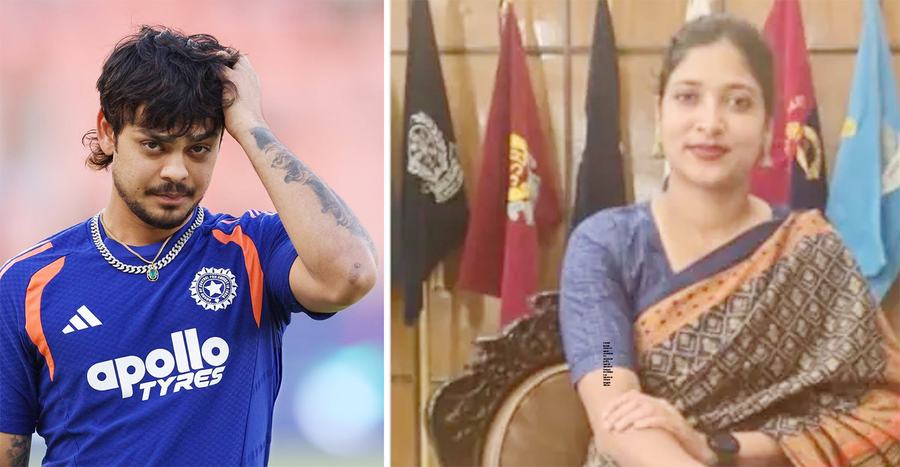
West Bengal woman IPS officer Dr. Bushra Bano has been in the news these days. A video recently shared on social media has sparked controversy over her use of phrases such as “Assalamu Alaikum,” “InshaAllah,” and “JazakAllah,” as well as her use of the Islamic greeting. Around the same time, she was also transferred. Dr. Bushra Bano, who gave up a lucrative job in Saudi Arabia to dedicate herself to serving the country and successfully cleared the prestigious Union Public Service Commission (UPSC) examination twice, is now the target of an organized online campaign and discriminatory treatment.
Dr. Bushra Bano had posted a video on social media platform X in which she spoke about the support she received from the Residential Coaching Academy (RCA) of Aligarh Muslim University and encouraged students preparing for the civil services examinations. Her video particularly focused on her journey to joining the civil services.
Before entering the civil services, she had worked as an assistant professor in Saudi Arabia. During the course of her preparation, she spoke about the facilities she received from Aligarh Muslim University’s Residential Coaching Academy (RCA). She said that she benefited from various facilities, including study materials, a test series and access to the library, while preparing for the civil services examination. The central theme of her video was her journey from her academic and professional life to the civil services.
The objection was that at the beginning of the video she said “Assalamu Alaikum,” used the traditional religious phrase “InshaAllah” during the conversation, and concluded with “JazakAllah.” Following this, a Hindutva organization called the “Hindu Legal Fund” lodged a complaint with the Home Secretary of West Bengal, arguing that a government officer should use national slogans such as “Jai Hind” or “Vande Mataram” instead of religious expressions in a public message.
Based on this general and innocuous conversation, sections associated with Hindutva launched a vitriolic campaign against Bushra Bano.
The question is: What harm or damage was caused by her use of these words, and whose sentiments were hurt because of them? What was the reason for taking such action?
During the recently played T20 series between Afghanistan and India, Indian wicketkeeper-batter Ishan Kishan also recited “Bismillah-ir-Rahman-ir-Rahim” during an event. Afghanistan hosted a dinner for the Indian team, where all the players appeared to be sharing their experiences in a very cordial atmosphere. Afghanistan Cricket named the gathering, held on the night of September 16, “Koh-e-Zafar.”
The event was attended by senior BCCI officials as well as several Indian players. There were several moments during the gathering that made people laugh, but one particular moment drew everyone’s attention. Before answering a question, Ishan Kishan said “Bismillah-ir-Rahman-ir-Rahim,” which brought smiles to everyone’s faces and was followed by laughter throughout the hall.
Ishan was asked: “What impresses you the most about the passion and enthusiasm of the Afghanistan players?” In response, he jokingly said, “Firstly, Bismillah-ir-Rahman-ir-Rahim.” As soon as the words “Bismillah” came from Ishan’s lips, Shreyas Iyer and Abhishek Sharma, who were sitting near him, as well as the Afghan players, could not help but smile.
Nevertheless, the government officially described Bushra Bano’s transfer as being in the “public interest” and did not confirm that her use of the Islamic greeting was the reason for the transfer. However, the timing of the transfer, coming immediately after the complaint and online outrage, has raised serious questions.
The two individuals hold different professional positions, but it is difficult to ignore the apparent contrast in the public reaction. Is the issue really the use of religious expressions, or does their acceptability depend on who is using them?